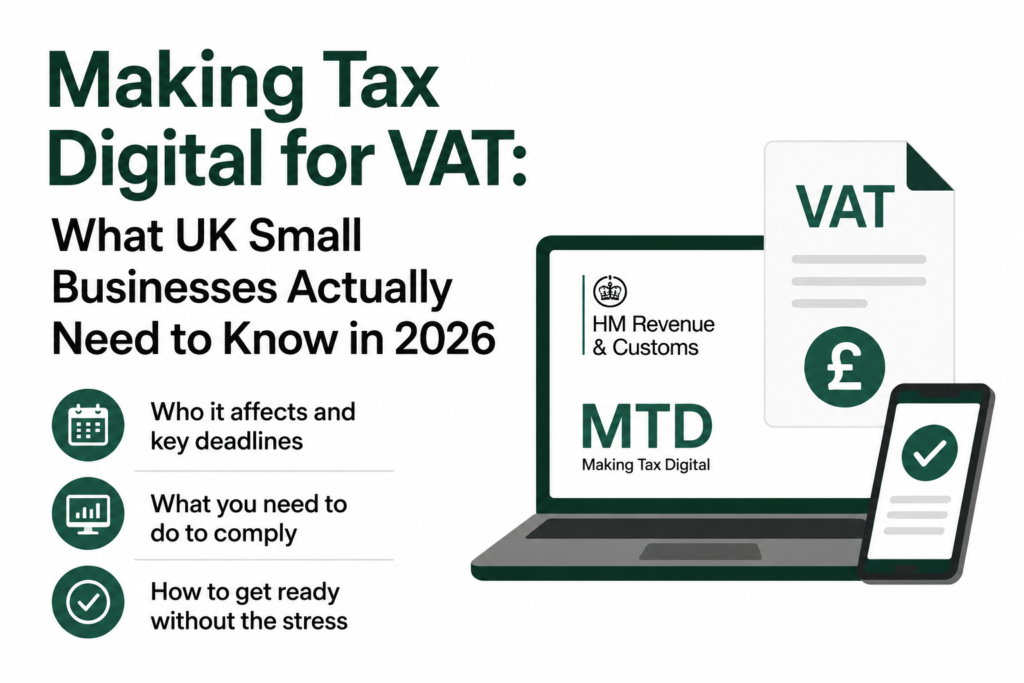
There are two different “Making Tax Digital” schemes, and mixing them up is one of the most common points of confusion for sole traders and landlords. MTD for VAT has been running since 2022 and applies to anyone VAT registered, regardless of turnover. MTD for Income Tax is a separate scheme entirely, based on how much you earn rather than whether you’re VAT registered — and it started rolling out this year. Here’s what actually applies to you.
## What MTD for Income Tax actually is
Making Tax Digital for Income Tax Self Assessment, usually shortened to MTD ITSA, replaces the traditional annual Self Assessment return with digital record-keeping and quarterly updates sent to HMRC. Instead of filing one big return at the end of the year, you send HMRC a running update every three months, then a final declaration that pulls everything together.
It applies to sole traders and landlords — not limited companies, and not people who are only employed through PAYE. If your income comes from self-employment, property, or both, this is the scheme that affects you.
## The thresholds, and where things actually stand right now
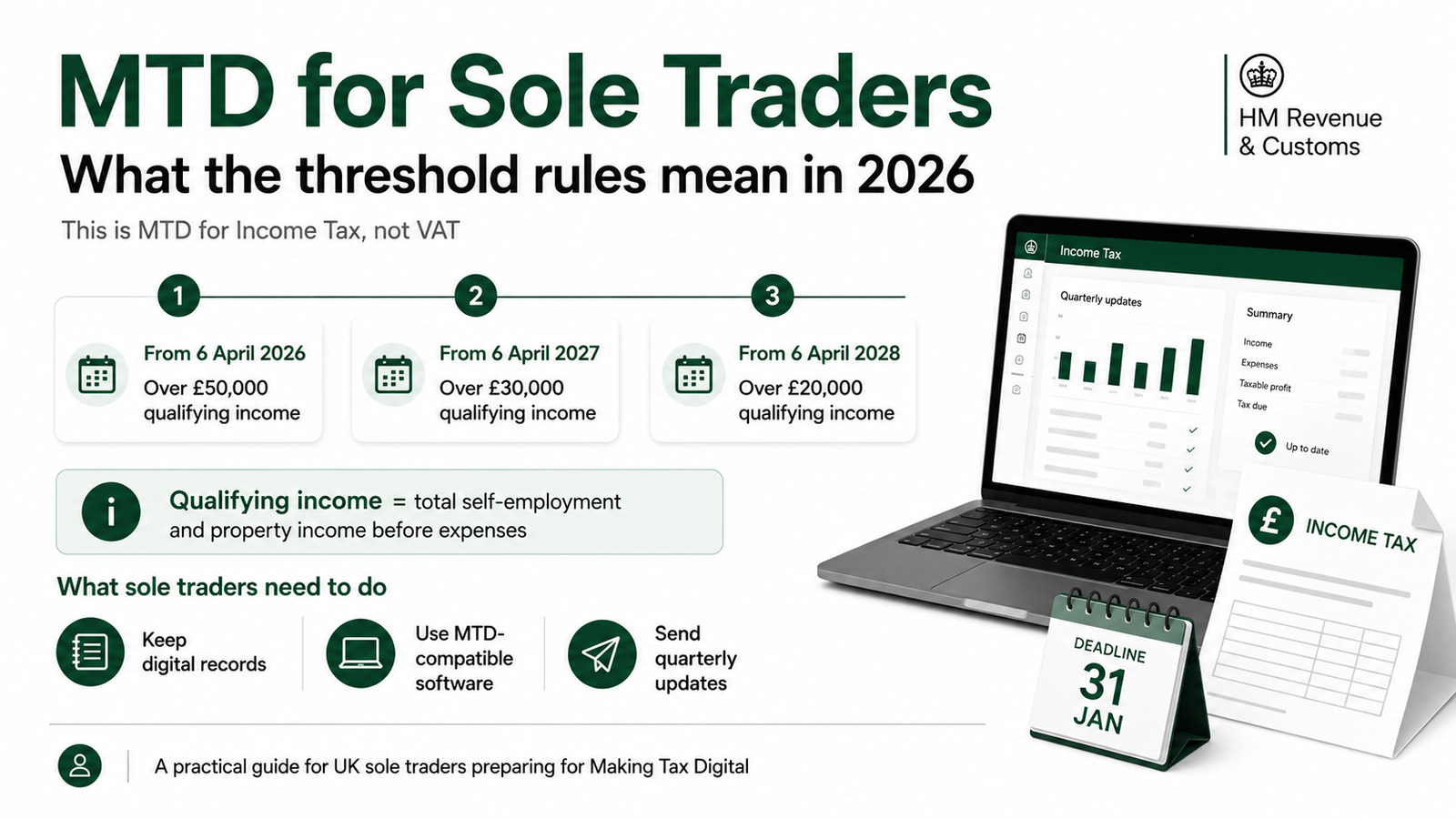
This is being phased in gradually, based on gross income before expenses:
– **From 6 April 2026** — mandatory if your gross qualifying income from self-employment and/or property was more than **£50,000** in the 2024/25 tax year. This phase has already started.
– **From 6 April 2027** — the threshold drops to more than **£30,000**, based on your 2025/26 income.
– **From 6 April 2028** — the threshold drops again to more than **£20,000**.
If your combined gross income from self-employment and property is below the relevant threshold for your phase, you’re not required to join yet, though you can register voluntarily if you’d rather get used to the process early.
One detail that trips people up: it’s **gross income**, not profit. HMRC looks at your turnover before you deduct expenses, allowances, or costs. A sole trader with £55,000 in sales and £20,000 in expenses has £35,000 in profit, but their qualifying income for MTD purposes is still £55,000 — comfortably over the current threshold.
## What counts toward your threshold
Qualifying income is your combined gross income from:
– Self-employment (as a sole trader)
– UK and overseas property income
It does **not** include PAYE wages, dividends, pension income, or savings interest. If you’re a sole trader earning £35,000 from your business and also have a £40,000 PAYE job, only the £35,000 counts toward your MTD threshold — the PAYE income sits outside this calculation entirely.
If you have both a self-employment and a rental property, the two are added together. A landlord earning £27,000 in rental income who also runs a small self-employed business earning £25,000 has £52,000 in combined qualifying income — over the £50,000 threshold, even though neither source alone would trigger it.
## What you’ll actually need to do differently
If you’re in scope, the practical changes are:
**Keep digital records throughout the year**, rather than gathering everything up once annually. Every item of business income and expense needs to be recorded digitally as you go.
**Submit a quarterly update to HMRC**, roughly every three months, summarising your income and expenses for that period. This isn’t a full tax calculation — it’s a running record.
**File a Final Declaration at year end**, which pulls together your quarterly updates along with any other income (like PAYE or dividends) to work out your actual tax liability. This effectively replaces the old Self Assessment form.
You’ll need software that’s compatible with MTD for Income Tax to do this — HMRC no longer accepts these updates being typed manually into their online portal.
## If you’re close to a threshold, don’t wait until the deadline to find out
The income figure that determines which phase you fall into is based on a **specific prior tax year**, not your current one. Your 2024/25 income determines whether the £50,000 threshold applies to you from this April; your 2025/26 income determines whether next year’s £30,000 threshold applies. That means the number that matters is often a year that’s already finished — if you’re not sure whether you crossed a threshold, it’s worth checking your actual filed figures rather than guessing based on how business is going right now.
It’s also worth checking early even if you think you’re safely under the threshold. A good year, an unexpected property sale, or simply totalling up all your income sources together for the first time can push someone over a threshold they didn’t think applied to them.
## Where this gets genuinely stressful — and how to avoid it
The businesses that struggle most with this aren’t usually the ones with complicated finances — they’re the ones without a consistent system. If your receipts, invoices, and bank records are scattered across email, a drawer, and half-remembered conversations, quarterly reporting turns into a quarterly scramble. If everything’s already organised as it comes in, a quarterly update is just a snapshot of records you already have, not a fresh piece of work every three months.
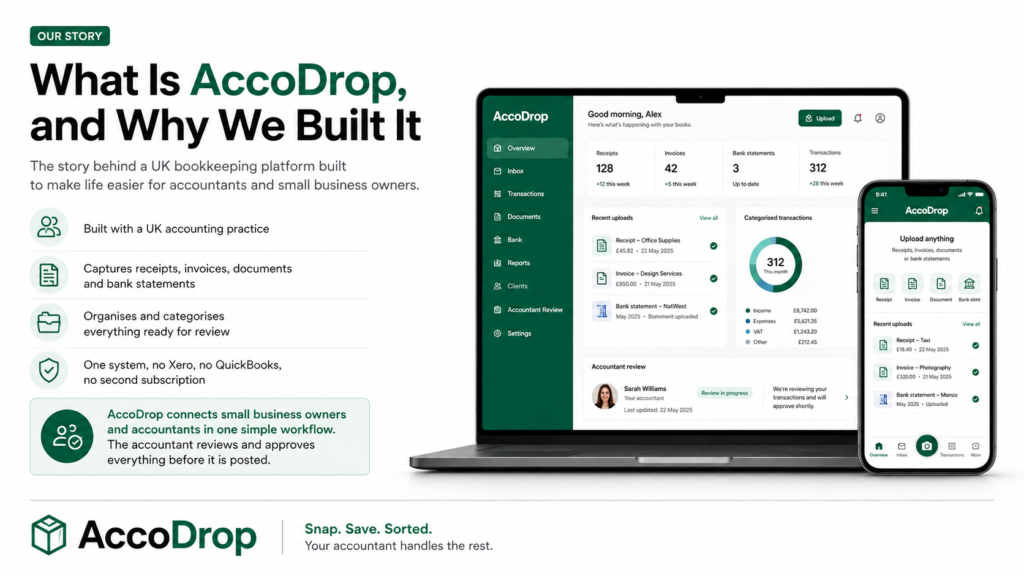
This is exactly the gap AccoDrop is built to close. Receipts and invoices get captured and organised as you go, bank statements are uploaded and prepared for review rather than typed out by hand, and everything stays visible in one place instead of scattered across formats. To be clear about where things stand: AccoDrop doesn’t yet submit MTD returns directly to HMRC — that’s a separate, larger piece of work we’re building toward. What AccoDrop does today is make sure the records behind your quarterly updates are properly organised, so whatever software or accountant handles the actual submission has clean, complete information to work from.
If you’re not sure which threshold applies to you, or when your specific start date is, HMRC and most accounting bodies have eligibility checkers that use your actual filed income — worth five minutes to confirm rather than assuming based on the headline £50,000 figure.
—
*Not sure if MTD for Income Tax applies to you yet, or want help getting your records in order before it does? [Get in touch](/contact) — happy to talk through where you actually stand.*